
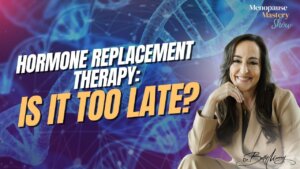
For many women, the question “Is it too late for me to start hormone replacement therapy?” looms large after the age of 65. Decades of medical guidance, heavily influenced by the results of the 2002 Women’s Health Initiative (WHI), suggested a hard stop on HRT based more on fear than fact. But is that guidance still valid in today’s world? Let’s unravel the myths and get clear on the evidence about HRT for women in their late 60s, 70s, and beyond.
The Problem with Past Paradigms
After the WHI sounded alarms about increased risks from combined oral hormone therapy, research on HRT for women over 65 essentially vanished. As Dr. Betty Murray describes, this left women in a “clinical no-man’s land”—told they were simply too old for HRT, regardless of their health or individual needs.
However, this guidance reflects a legacy problem. The risks associated with older forms of HRT—especially oral, synthetic hormones—simply don’t apply across the board to women considering therapy today.
Transdermal Estrogen: A Safer Modern Alternative
Here’s the key difference:
- Oral estrogen (as used in the WHI) goes through the liver, generating byproducts that can increase blood clot and stroke risk, especially in older women.
- Transdermal estrogen (delivered via skin patches, creams, or gels) is bioidentical, bypasses the liver, and has been shown in large observational studies to not increase risks of clotting, stroke, or heart attack when used appropriately.
This means the “rules” based on old studies shouldn’t automatically apply to modern, transdermal HRT.
Real Benefits for Older Women: Bones, Sleep, and Brain
Bone Health:
Estrogen is the body’s main “foreman” for building and keeping bone. Women on long-term transdermal HRT—even into their 70s—can maintain and even improve bone density, dramatically lowering fracture risk, which is a key concern as we age.
Sleep and Cognition:
Fragmented, poor sleep increases dementia risk by up to 36%. Modern HRT, using both estrogen and progesterone, can improve sleep quality—a modifiable factor in preventing cognitive decline and supporting brain health, especially for those with genetic risk (like APOE4 carriers).
Cardiovascular Risks: What You Need to Know
The primary risks for women starting HRT after 65 revolve around cardiovascular health, but mainly when using oral estrogens in women with existing disease. For metabolically healthy women with no significant heart disease, low-dose transdermal estrogen appears to have a much better safety profile.
Advanced screening like calcium scoring and arterial ultrasounds can individualize your risk and help guide safe decision-making.
Personalized Decision-Making: What Matters Most
When considering HRT after 65, age alone isn’t the determining factor. What matters more is:
- Your overall health and absence of cardiovascular disease.
- Your individual risk factors (osteoporosis, sleep issues, genetics).
- Choosing the right type of hormone and delivery system.
As Dr. Betty Murray emphasizes, “Absence of evidence isn’t evidence of risk.” Today, women deserve personalized attention and thoughtful risk-benefit analysis—not blanket refusals based on outdated studies.
Bottom Line
It’s not too late to reconsider hormone replacement therapy—even if you’re well past the traditional “window.” Transdermal HRT has opened new possibilities for postmenopausal women to protect bone health, boost sleep and cognition, and increase quality of life. Collaborate with a knowledgeable healthcare professional who will personalize recommendations and monitor your progress. Your age shouldn’t be a barrier—your health and goals should drive the conversation.




FODMAP approved Creamy Potato Soup
written by Jenny Bair, MHE (author of “What the FODMAP?”) You will first, oven roast Russian Fingerling potatoes on 325 degrees for 35 minutes with olive oil, sea salt and peppers. (You can use Yukon Gold or Red potatoes are

Help the homeless this holiday season
November 21, 2014 0 Comments To help homeless people on the streets of Dallas, Brenda Briscoe is offering a discounted session of $20 off the regular price of a Bowen Therapy session when you bring 3 different items on this list: -New
Brain Training: Exercising for Your Mind
By Betty Murray As we age, cognitive function decreases, but loss of memory and mental function isn’t necessarily inevitable. Healthy brains are more likely to maintain their function throughout the years. So how do you keep your brain healthy? In the